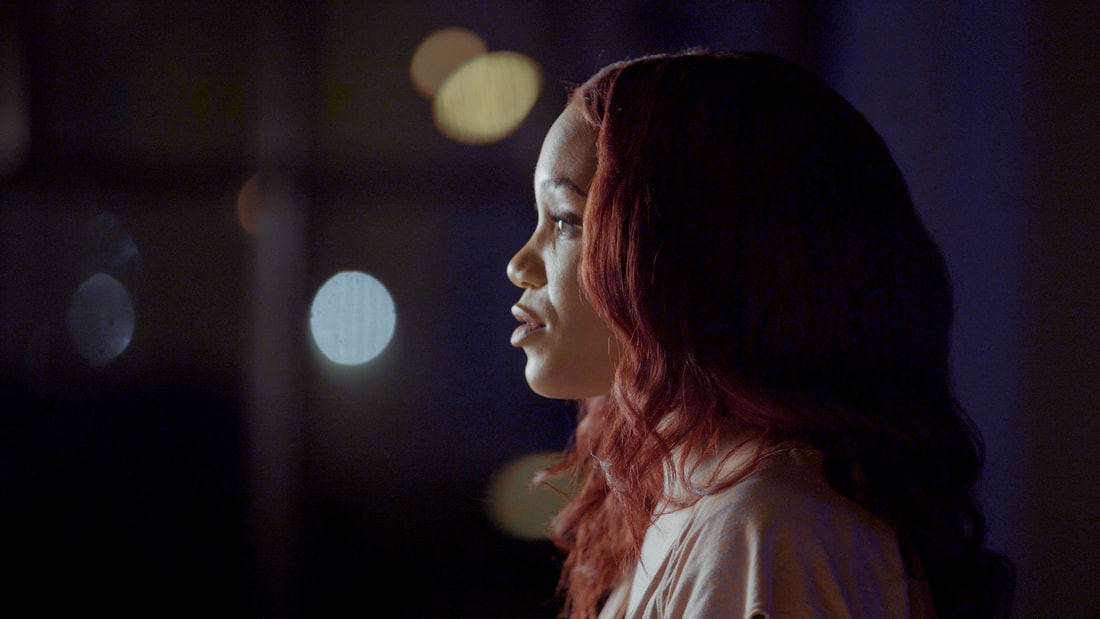
Video Storytelling for Nonprofits: Where Do We Start?
Video Storytelling for Nonprofits: Where Do We Start?
Most nonprofit leaders I talk to say the same thing: “We know we need to tell our story, but we don’t know where to start.” The good news is that you don’t need a big budget, a perfect script, or a camera in your hand to begin. You need one person and one story.
After 20 years in video production, including years of telling stories inside a large church, here is the process I use with every organization I work with.
Start With One Person Whose Life Changed
Before anyone picks up a camera, I ask every nonprofit and church the same question: do you have someone whose life has been changed because of your organization?
My approach to storytelling took a big turn when I worked at Canyon Ridge Christian Church, which centered its storytelling on a simple idea: what life looked like before, and what it looks like now. I’ve carried that into everything I do since.
So think about the people you serve and ask:
What did their life look like before they got involved with your organization?
Were they in a season of despair, with little hope or direction?
What does life look like now? What has changed, and what have they broken through?
Are there new habits, a new sense of purpose, or a more generous heart?
Whether it’s recovery from addiction, a restored family, or someone who now gives their time and money back to the community, a clear before and after is the best place to start.
Pre-Interview Before You Ever Film
Before we schedule a shoot, set up a light, or turn on a camera, we have a conversation. It might be a phone call, a Zoom, or an in-person meeting. We ask them to tell us about their life, what they’ve been through, and what life looks like now.
This pre-interview does three things:
It helps us see whether the person can share their story clearly
It tells us whether this is the right story for your organization
It lets the person get comfortable with us before the cameras show up
If the story is solid, we move forward and schedule the shoot. If it isn’t the right fit, we’ve saved everyone time and money, and we can look for a better story.
Make the Shoot Day Feel Like a Conversation
Many people who share their stories are talking about hard things. Some stories involve trauma, grief, or anxiety, and it can all come up when the camera is rolling.
Arrive Before You Begin
Before we start, I invite people to do a breathing exercise with me. I’ve discovered that it helps people arrive physically and emotionally before they start talking.
Pretend the Cameras Aren’t There
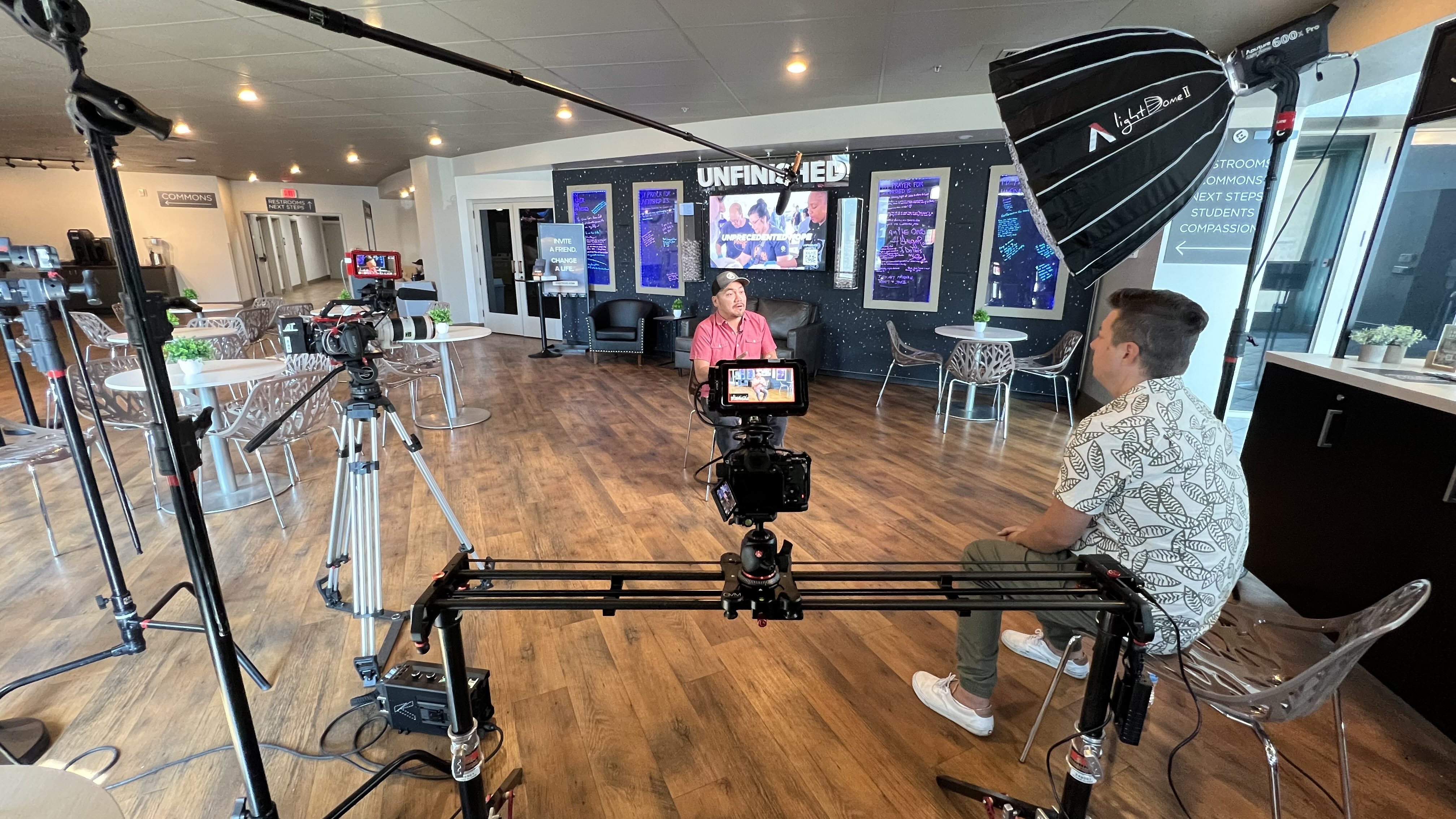
Next, I tell them this is just a conversation between the two of us. They don’t have to look at the cameras or think about the lights. We’re just two people having a coffee.
I also remind them that it doesn’t have to be perfect. They don’t need to say everything the right way, because we can edit anything out. That freedom is what lets people relax and be real, and real is what connects with an audience.
The Story Structure We Use
The structure that holds our videos together is adapted from the beat sheet in Blake Snyder’s book Save the Cat. I took pieces of it and built my own short version for story videos. These are the main beats.
The Opening Image
The first impression of the film. It sets the mood and gives us a look at what this person’s life was like before.
The Theme and the Setup
We state what the story is really about, then show what was missing in the person’s life. This is the calm before the storm, the world as it was before everything changed.
The Catalyst
Something knocks everything down. It might be a cancer diagnosis, or the loss of someone close. Whatever it is, it forces a moment where the person says, “I need to change.”
The Dark Night
This is the rock-bottom moment. The person feels hopeless and lost, and maybe a little foolish. It’s also where honesty and humility show up. It’s the part of the story that audiences connect with most, because we have all felt it in some way.
The Break Into Three
The person discovers an answer. They find a way forward, maybe through better habits, a step of faith in a new talent, or choosing generosity over holding everything tight. Not every story gets a neat solution, but there’s usually some insight that changes how they move forward.
The Finale and the Final Image
The lessons get applied, and we see the old world give way to a new one. We see the after. The final image mirrors the opening image, and it serves as proof that the change is real.
This structure is the backbone of the video. It gives viewers somewhere to see themselves in the story, in the struggle and in the hope.
Add B-Roll, Photos, and a Call to Action
Once the interview and structure are in place, a few extras make the story richer.
Artistic B-roll that complements the story and gives the viewer something beautiful to look at while they listen
Photography from the person’s past, which can say as much as words about where they’ve been
A call to action shaped for your organization, in the voice of the person whose life changed: “I experienced this change because of this organization. Will you partner with us so more people like me can experience it?”
That call to action is the whole point. A story that moves people should give them a clear way to respond.
Don’t Let Your Story Video Die After One Showing
A finished video is just the start. Here is how to keep it working.
Share it at an event. For a church, that could be a weekend service. For a nonprofit, it could be a gala, a fundraiser, or a volunteer night.
Cut it into short social clips. Thirty-second videos on Facebook, Instagram, and TikTok keep people watching all week.
Send people to your website. Pair the video with a written post about the life-change story and how others can take part, through giving, volunteering, or joining a program.
Put it in your email newsletter. Give readers a quick look at the before and after, and invite them into the story.
What This Looks Like in Real Life
At Canyon Ridge Christian Church, the videos I created led to new donors, and giving multiplied in many ways. They also brought in new volunteers, because people saw stories told in a professional, artistic way and wanted to be part of it. Some even wanted to learn how to do it themselves.
The biggest result surprised me. In a church of 3,000 or more people on a weekend, we saw a culture shift. Because we told stories consistently, people felt freer to share their own. If they could share their story at church, they could share it at work, at their kids’ school, and anywhere else in their community. It wasn’t an event turnout. It was a complete culture turnout.
That’s what consistent storytelling can do. It doesn’t just raise money. It helps your whole community see the good that’s happening, and it invites them to take part.
Not Every Story Needs a Perfect Ending
Here’s an opinion some leaders might not want to hear: your stories don’t have to be pretty. Life isn’t pretty, and the stories that connect the most are often the honest ones.
Some stories have a great ending. Others don’t yet. The person is still struggling, still recovering, still figuring things out. But maybe because of your organization, they have a glimmer of hope, enough to make it through another week.
Celebrate those stories too. Whether the change is small or huge, it’s worth sharing. You don’t need a perfect story to start sharing the good you’re doing. You just need to start, because people out there need hope and encouragement, and your stories can give it to them.
So, Where Do You Start?
Here’s your starting line:
Find one person with a clear before and after
Have a pre-interview conversation to make sure the story is the right fit
Create a comfortable, conversational space for them to share
Build the story with a clear structure, then add B-roll, photos, and a call to action
Share it in more than one place, and keep telling stories consistently
Remember that video is a long game. No one builds trust with a single video, but a steady stream of honest stories will do it over time.
If you’re not sure where to begin, let’s talk. We start with a conversation, not a sales pitch, to understand your mission, your people, and what you’ve already tried. Then we build a plan that fits. For some organizations, that’s one story video. For others, it’s an ongoing video partnership that helps you share your story all year long.
If nothing changed in the next 12 months, what would that mean for the people you serve? If that question stays with you, that’s the gap to close. Book a call to learn how we can help!


